Glass Fabrication
Toughened Glass
Cut, edge-worked and drilled, then toughened and heat-soaked
Onos supplies toughened glass in the UAE to installers, glazing firms, main contractors and fit-out companies. We cut, edge-work and drill each pane, toughen it in our own factory and heat-soak it where the specification calls for it. The glass is sold on its own, to your schedule, or glazed into the aluminium units we fabricate.
Toughened glass is also called tempered glass, or securit in UAE trade speech. It is heat-treated safety glass, defined in Europe by EN 12150-1. Heat-strengthened glass (EN 1863-1) is a different product and, on its own, not a safety glass (Pilkington). ASTM C1048 covers both, so the specification should name the treatment it wants.
Toughened safety glass
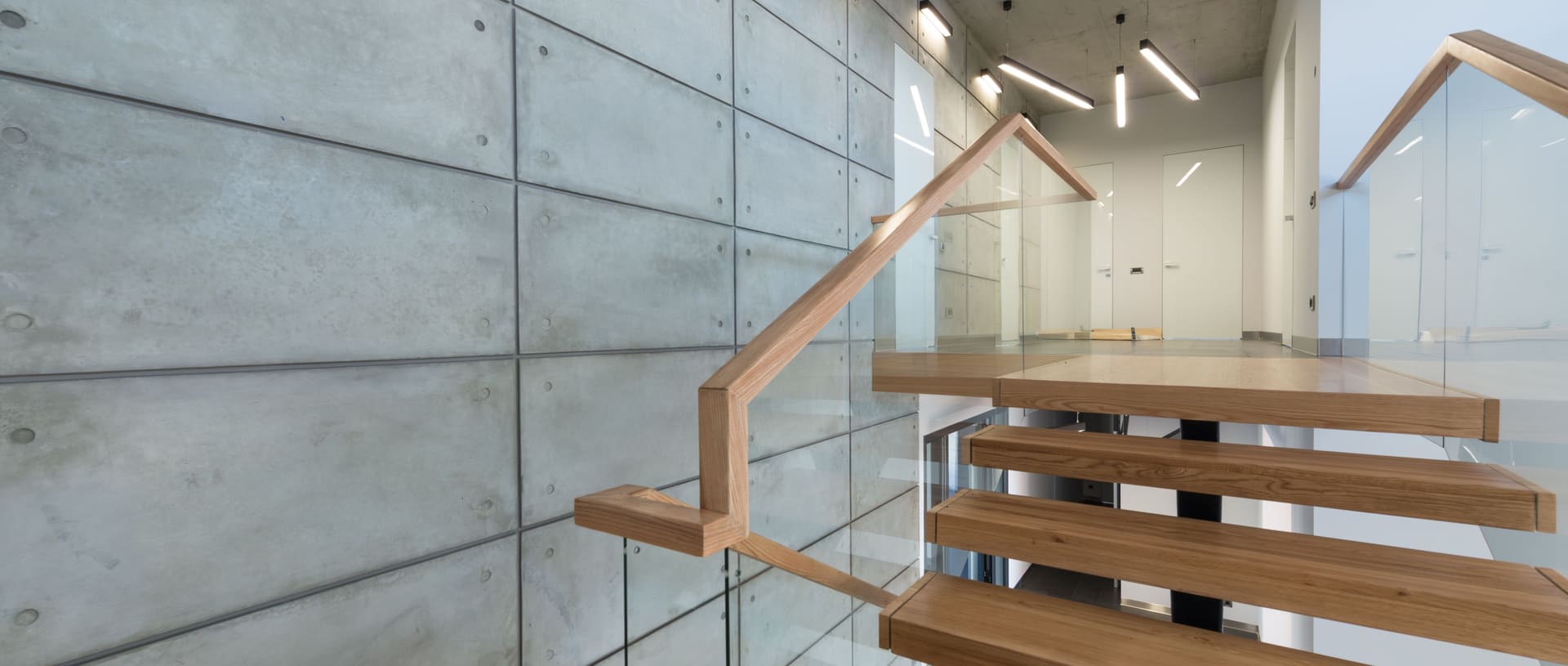
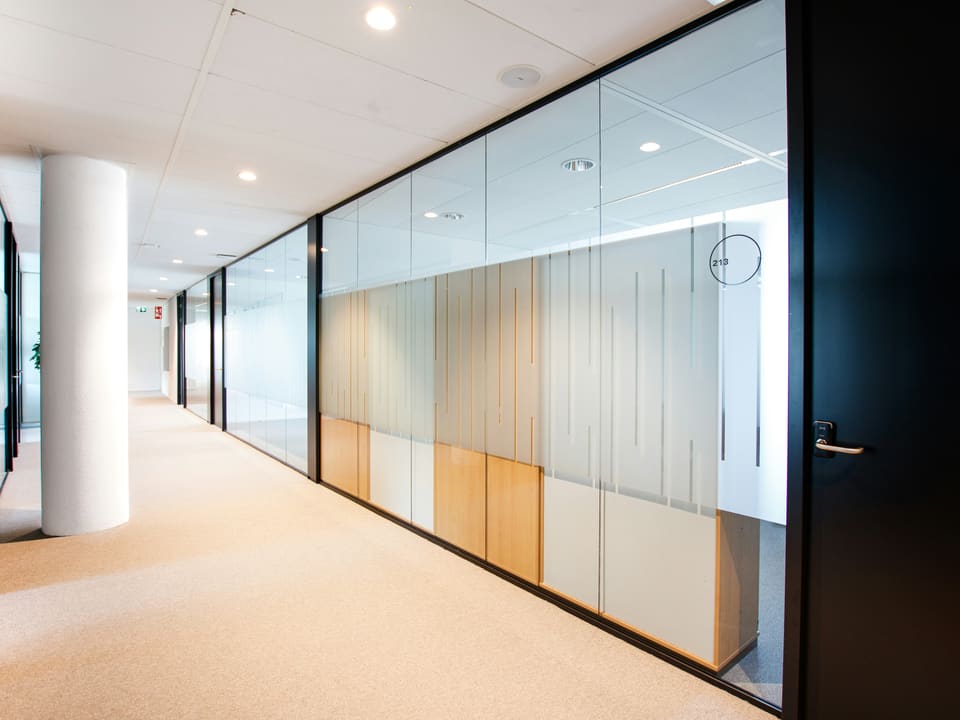
Toughening heats a cut pane and then cools it rapidly, which puts its surfaces into compression (NGA). If the pane breaks, it breaks into small fragments rather than shards (Pilkington), and NGA’s rule of thumb puts fully tempered glass at about four times the breakage strength of annealed glass of the same thickness. That is why specifications call for it in doors, partitions, balustrades and the panes of many insulating units.
The heat treatment fixes the pane’s shape for good. Whatever the drawing shows, from the size to every hole, notch and edge finish, has to be right before the glass goes into the furnace.
- Glass partitions and partition doors
- Aluminium doors: leaves, side panels and fanlights
- Glass balustrades, usually toughened and then laminated
- Panes for double glazed units where the make-up calls for toughened glass
Cut and drilled before toughening
A toughened pane cannot be cut, drilled or edge-worked afterwards (Pilkington), so all of this work happens first, from the final schedule.
-
Cutting
Panes are cut from float glass to the sizes on your schedule. Each pane keeps its opening or mark reference from here to delivery.
-
Edgework
Edges are arrissed, ground or polished to the finish you specify; polished edges suit glass with exposed edges (Pilkington). Edge quality also matters to strength: NGA notes that edge damage can offset the benefit of heat treatment (NGA).
-
Holes and notches
Holes for patch fittings, handles and point fixings, and notches for hinges and locks, are made to a dimensioned drawing of each pane. The limits on hole size and position depend on the glass thickness and the pane, so we check each drawing before cutting.
-
Final dimensions
Because the pane cannot be trimmed later, sizes should come from site-checked dimensions. We raise anything unclear as a clarification before cutting.
Our toughened glass range
Indicative production ranges. Each quotation confirms the sizes and make-ups for your project.
| Item | Range |
|---|---|
| Thickness | 4, 5, 6, 8, 10, 12, 15 and 19 mm |
| Maximum pane size | 2,440 × 4,800 mm, depending on thickness |
| Glass | Clear, low-iron, tinted and reflective float |
| Coated glass | Toughenable solar-control and low-E coatings |
| Edgework | Arrissed, flat ground or flat polished |
| Holes and notches | Made before toughening, to your drawing |
| Heat soak | EN 14179-1 cycle, every pane in the batch |
Panes outside these ranges: send the details and we will confirm what we can supply.
Heat-soak testing
Toughened glass carries a small risk of spontaneous breakage caused by nickel-sulphide inclusions. Heat soaking is a batch test in a separate oven after toughening, intended to make affected panes break in the factory rather than in the building (NGA). EN 14179-1 defines heat-soaked toughened glass; its 2016 revision holds the glass at 260 ± 10 °C for at least two hours (CWCT). The test reduces the risk but does not eliminate it (NGA).
Heat soaking is an extra step, so it adds to the price and the programme. The consultant or facade engineer decides where it is required, often for facade glazing, overhead glass and balustrades. Say on the schedule which panes need it, and we heat-soak those panes after toughening, to the EN 14179-1 cycle.
Specification and what to send
The specification sets the glass type and thickness; we process the panes to it. Send these with a quote request:
- Pane references that match the drawings and the schedule
- Thickness, glass type and any coating, with the coated surface
- Sizes and quantities from site-checked dimensions
- Edge finish per pane: ground or polished
- Dimensioned drawings for holes, notches and cut-outs, with the fittings they take
- Which panes need heat soaking
- Toughened glass only, or laminated or made into double glazed units afterwards
- Glass only, or glazed into our frames, and the delivery programme
How we work
Six stages take a toughened glass order from your schedule to delivery.
-
Schedule check
Sizes, thicknesses, edge finishes and hole positions are checked against the drawings and fittings. Gaps come back as clarifications.
-
Quotation
Priced per pane type. Thickness, size, edgework, the number of holes and notches, and heat soaking move the price most.
-
Cut and edge
Panes are cut to size and their edges ground or polished, after sign-off of the final sizes.
-
Drill and notch
Holes, notches and cut-outs are made to the dimensioned drawing for each pane.
-
Toughen and heat-soak
Panes are toughened, then heat-soaked where the schedule calls for it.
-
Inspect, label and pack
Each pane is checked against the schedule, labelled by reference and packed for delivery, or passed on for laminating, double glazing or factory glazing.
Send your glass schedule
Send the drawings, the glass schedule and the hole and notch details. We reply with clarifications or a written quotation, glass only or with frames.

Send drawings. Get a fabrication price.
Tell us what you need. Onos replies with questions or a written fabrication quotation, and never quotes for installation.
- Drawings: elevations, sections and the opening or panel schedule
- System and series, or the performance the specification asks for
- Finish, glass make-up and hardware
- Quantities or a BOQ, and the delivery emirate
- Programme: when you need fabricated units on site
- Who installs: your team or your nominated installer
Drawings and BOQs: [email protected]